https://www.youtube.com/watch?v=eYyVeAfjHZw -link to Youtube video
Wednesday, December 18, 2024

Monday, December 9, 2024
Music Marketing
Artist Background and Vision: Luvstruck is a hip-hop funk artist from Chicago Illinois. Luvstruck produces purely love-based songs. Luvstruck provides a pleasure for people in love
Target Audience: Luvstruck focuses on an audience composed of Age: 18-35
Interests: Love-based hip-hop songs.
Platforms: Instagram, TikTok, Spotify, YouTube, X, and Apple music.
Market Research Competitor Study: My group reviewed successful companies and artists including Bryson Tiller, 6LACK, PARTY NEXT DOOR, Childish Gambino for marketing ideas.
Branding and Visual Identity Tone: Romantic, introspective, and soulful.
Visuals: Warm, moody colors like red, pink, and orange, the color palette representing love and passion.
Logo: minimalistic logo with warm colors
Social Media Campaigns
Instagram Reels: Love topics and relationship messages with Luvstruck tracks in the background
Instagram posts: Photos of his outfits, which can bring a target audience of people who like streetwear
TikTok Trends/Challenges: Could include A lyric in the song which can be used to post with pictures of peoples partners. Could create a dance that matches one of his songs, leading to higher promotion of the song
Influencer and Fan Involvement: Once Luvstruck becomes more popular he would work with relationship-based influencers and other hip-hop artists who share a similar tone in song choice. Luvstruck would also host a series of Q&As with fans, between them live Q&As, fan-picked cover art contests, and virtual listening parties.
Wednesday, October 30, 2024
War Reasearch
Everything about War films
.jpg) |
| An example of a film that shows a the theme of good and evil and also Where the protagonist is facing overwhelming odds. |
Content
 |
| The film Inglourious Basterds uses the theme of brotherhood to signify the close relations and trust that the men have with each other |
Production Techniques
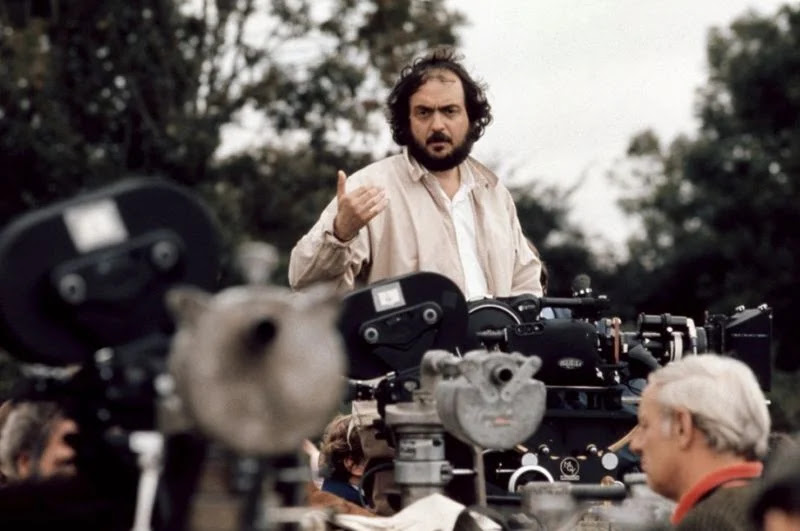 |
| Behind the scenes of Full Metal Jacket |
How the genre marketed
Marketing war films A war film is marketed through several channels such as Partnerships: studios may collaborate with other companies to market their films. Recently, Warner Bros., Intel, and Dell partnered in the making of a virtual reality
 |
| One of Dunkirk's partnerships with the game World of Tanks |
Film Samples
 |
| (2022) All Quite on the Western Fort |
The 2022 film All Quiet on the Western Front, directed by Edward Berger, offers a harrowing depiction of World War I that embodies the war genre by confronting the chaos and devastation of battle from a soldier’s perspective. It also demonstrates the genre's capacity not only to depict the violence and strategies of battle but also to reveal the psychological cost of war on individuals and society. By focusing on the futility and moral ambiguity of war, the film reinforces the genre’s ability to provoke reflection on the human condition and the devastating impact of armed conflict.
 |
| Napoleon (2023) |
Ridley Scott's Napoleon is a fascinating addition to the war genre, blending historical narrative with the intense, large-scale battles that define such films. By focusing on Napoleon's life—from his rise to power to his complex relationship with Josephine—Scott not only illustrates personal ambition but also explores the brutal nature of warfare during the Napoleonic era. The film embodies war-genre elements through its grand battles, strategic tension, and the portrayal of soldiers as tools in a larger, often merciless game of political power. Many scenes like the Battle of Austerlitz serve as dramatic set pieces, capturing the harsh realities of 19th-century warfare with impressive attention to historical accuracy in weaponry, tactics, and combat formations.
Other examples of War Films
 |
| Saving Private Ryan (1998) |
 |
| The Boy In The Striped Pyjamas (2008) |
 |
| The Pianist(2002) |
 |
| Jarhead(2005) |
Friday, October 18, 2024
Representation
 |
| Singing in the Rain |
 |
| Don Lockwood |
Don Lockwood is the classic male movie star of Hollywood's Golden Age-smooth, talented, and easily adaptable to the shifting cinematic landscape. With his charm and talented abilities, with appeal both in front and behind the camera, he is an asset to this new world of talkies. The film portrays him as the quintessential man for this transition, changing seamlessly from physical, silent stunts to more verbal and musical ones. Whereas Don is often cast as a hero, he serves to mirror the Hollywood system in which it can create stars as workable icons, conversely demonstrating that talent alone is less important than the ability to fit the demands of the evolving industry. This again is apparent in his relationship with Kathy Selden who plays the character Debbie Reynolds, who is cast as his love interest; after all, it is Kathy's "voice" that ultimately saves Don's career, underscoring the power of image and sound in creating stardom.
Lina Lamont: The Tragic Product of Hollywood
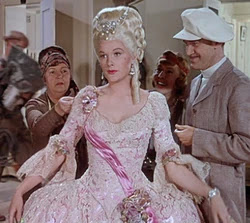 |
| Lina Lamont |
By contrast, Lina Lamont is portrayed as the tragic victim of the sound revolution. While she was a huge star of silent films, her thick nasal voice becomes her undoing in the realm of talkies. The failure to make a transition into sound films, despite a glamorous image, says everything about superficiality-obsessed Hollywood. Not only was Lina's portrayal comic, but it was very tragic too; it underlined the ruthlessness of the industry towards those who fail to keep pace with changing technologies and styles. The irony, of course, is that this face, tailor-made for a movie star, belongs to a voice-a supposed mark of authenticity-that reveals the artifice of her screen persona. Lina thus becomes an icon of Hollywood's expendability, a metaphor for the way in which Hollywood discards its stars once they no longer serve its purposes.
Hollywood's Reflection on Itself
In Singin' in the Rain, the characters of Don and Lina represent two aspects of Hollywood's perception of itself. Where Don represents the resilient face of the industry, Lina is its victim-a ruthless causality. The film uses their characters to comment upon this constructed nature of stardom and how careers can be made or ruined based on factors as arbitrary as a voice. Beyond the individual characters, the entire movie allows one to visualize just how Hollywood presents its own mythology-celebrating and poking fun at the glitz, glamour, and inevitable obsolescence of its stars.
Multimedia Companion:
Clip of Don Lockwood dancing in "Singin' in the Rain": This iconic scene makes him swim into sound films with ease-it symbolizes his adaptability and Hollywood's romanticized idea of the perfect male star. Lina Lamont voice scene: A small clip of Lina attempting to speak on the film would insinuate the tragedy of her fall, as that juxtaposed her voice against her beauty and really hammered home the superficiality theme of the film. Movie poster and behind-the-scenes photos: These will be useful in showing the difference between the public personas of the characters and the behind-the-scenes images of their struggles in a transitional Hollywood. While the wittily noticed film commentary on stardom reminds us that behind this spectacle lies an industry that is as fickle as it is glamorous, where representation makes or breaks a career.
Thursday, October 10, 2024
Sound Project
In class we discussed how sound techniques are essential in both audio production and sound design. Some of the sound techniques we discussed in class were non-diegetic audio, which are like a score which manipulates the audience's emotions and adds layers of meaning to what they see. An other technique we learned were sound bridges, what this does is ensures smooth transitions between scenes, making the film feel cohesive and continuous. Also we talked on how the score works. The score words hand-in-hand with these elements to create an immersive and emotionally rich experience.
The directions that we were instructed to follow for the sound project was to Brainstorm a 1-2 minute school-appropriate scene with action that occurs within this time frame. Avoid scenes involving getting ready for school/work, cooking, or robbery. Identify the sounds present in the scene and consider if the plot could be conveyed using only sound. Choose a scene for your project and create a detailed outline that explains how you will use sound to tell the story. You are allowed only seven words in the scene.
Submit your outline to Canvas under "Soundscape Planning Outline." Using sound effects databases and everyday items, create an audio recording that tells the story. No video is allowed; only a black screen or still image can be used. The scene must be 1-2 minutes long. Create at least four sound effects using random objects on a "foley stage" (no digitized audio or sounds made with your mouth). Record and edit a video showing how you created these four sounds. Submit three files: A complete sound file of the scene, labeled with group members' last names. Lastly a video showing the creation of the four foley sounds, labeled similarly. 1-3 images of your editing timeline showing the full audio layers.
The way me and my partner approached the brainstorming of the project was to think about places that had a lot of distinctive sounds, with that we thought about doing the sound project about the zoo. As we knew what we wanted to do, me and my partner started to look at videos of zoo tours and closely paying attention to the background sounds of the videos so we can create a similar environment in our project. The outline that we created when we were brainstorming helped us greatly as the outline gave us a rule of thumb of what to do and it helped us not going off track while editing the project. The editing software we used to create our project was Adobe Premier Pro. Reason for why I used it is because I really enjoy using Adobes software's and its was also made free because of our school district paying for it. One thing that I would like to improve would be being able to know how to share the project in a better way as I had to record the audio of the project on my phone and had to send the video of me recording the audio to my partner.
Monday, September 30, 2024
One Word Film
The directions for this project wasBrainstorming: Work in pairs to convey an assigned word through a story. Think about images, sounds, symbols, etc., and make sure the story can unfold in 60-90 seconds. Brainstorming Sheet: Complete the "One Word Film" brainstorming sheet to develop a shot list and editing techniques. Both members must submit the sheet on Canvas. Storyboard: Create a 15-slide storyboard illustrating your shot sequence and editing plans. Submit it to Canvas. Shooting: Gather all necessary video (no external content; must be original). Editing: Each group member must edit the footage independently. The film should be 1-1.5 minutes long, using only instrumental sounds or effects (no dialogue). Use Adobe Premiere, and submit editing progress or screenshots as evidence. Final Submission: Name the project "OWF_LastName" and upload it publicly to YouTube, Google Drive, or OneDrive. Ensure it is accessible before submitting the link
This is a picture of the rough outline of the story for what me and my partner created. Some of the things that me and my partner did while brainstorming was to look at some serious film scenes and try to take inspiration with the techniques used to create the feeling of "serious". An other thing that me and m partner did while brainstorming was to act out the scenes that we came up with in the storyboard and see if we liked what we had or if we had to make some changes The storyboard helped me pre-visualize the project by providing a clear, step-by-step visual outline of the project. It allowed me to see how each shot will look also it shows what camera angles, and sequences will be used. The editing software that I utilized was iMovie. Reason for why I used iMovie for this project was because it offers a simple interface with drag-and-drop functionality that makes it easy to create professional-looking videos without much technical expertise. Some things that was done well in the film was the editing in the film and also shooting the right types of shots. A thing that I would need to improve on would be using the right type of instrumentals to convey the right feeling. Link to One Word Film. OWF_GOMEZ
 |
| Storyboard |
Tuesday, September 3, 2024
Monday, September 2 2024 Camera Shot Quiz
Camera Shot Quiz
For this assignment, my teacher assigned a quiz but it wasn't a normal quiz. She assigned my class to tell a story in 15 shots using shots that we had previously learned.
I decided to tell a story about a Lego figurine who who was trying to escape from its key chain and wanted to explore the rest of the room.
I did a good job in picking which shots to use in order to progress the story in a well manor. My favorite shot was the extreme long shot of the Lego character in the hallway, reason why this is my favorite its because it shows how tiny the Lego character is compared to the rest of the hallway. One of things that I could've done better was the over the shoulder shot. Rather than having the focus on the door I should've have the focus on the Legos shoulder instead. I also could've done a better extreme close up shot as the arm in the shot is also including a small bit of the Lego head rather than only having the arm in the frame.
Subscribe to:
Posts (Atom)
CRR
For my Portfolio project, my partner and I developed a promotional campaign for a short film , which spans across multiple differen...

-
 (Bratwurst Supper) The question for CCR number 3 is 'How did your production skills develop throughout this project.' The way ...
 -
 While in Colombia, my room had curtains that reminded me a lot of the curtains in film noir movies but just a little more modern. (Ex...
.jpg)